George Shaw creates ghostly paintings of the Coventry council estate where he grew up.
" The estate is just a little bit older than me. There were no stories about it growing up. The only ones were stories we were making up.
So my dad said you will be the old guys, the first part of the history of a place like this.
But like me, the estate is putting on a bit of weight, falling apart a bit; it's got receding hairline. My work is a self- portrait."
"He started taking pictures of the estate out of sentimentality but what he found was a "blank page" to form his own work."
"There was no washing lines or back-to back houses like the Northern tradition of being working class. Here, if you were growing up in the suburbs your identity was blank. Part of this was trying to reinvent a tradition."
"When he found himself returning to the same scenes the paintings began to be as much about his won sense of memory and loss as the landscapes real decay."
"It is not about place- it is quite abstract. The painting is of how far away you are from there. It is a tethering so you know how far you've come. Each one is a marker , is place is a lens for how I see myself now. Time becomes compressed."
" There is a realism about them, the trees look like trees, the grass looks like grass. It has to or else it would be ironic. My art tutor said my work is loaded with contradictions . It is to do with class or with a British landscape."
Sunday, 2 March 2014
Wednesday, 26 February 2014
Zarina Bhimji Seminar presentation
A quote from Zarina Bhimji is "I'm not interested in people, my work always starts on a visual level, its to do with light, texture , composition, atmosphere and intimacy."
Zarina Bhimji is a filmmaker and photographer whose work explores landscapes and architecture.n I saw one of her films "Yellow Patch" at an exhibition in Walsall art gallery called "there is a place" , yellow patch was filmed in India.
It took around 7 years of production to make "Yellow patch" which is a 30 minute film.
I chose to look at Zarina Bhimji's work particularly because I found that in her films the sound was very effective and this sort of reminds me of an installation piece by Jane Packman.
Zarina Bhimji is a filmmaker and photographer whose work explores landscapes and architecture.n I saw one of her films "Yellow Patch" at an exhibition in Walsall art gallery called "there is a place" , yellow patch was filmed in India.
It took around 7 years of production to make "Yellow patch" which is a 30 minute film.
I chose to look at Zarina Bhimji's work particularly because I found that in her films the sound was very effective and this sort of reminds me of an installation piece by Jane Packman.
Which was a forrest that when you move within the installation the sounds changed and was very effective.
Which is similar to Zarina Bhimji's film , you have to pay attention to the sounds that you are being presented with. Bhimji's work has been a great influence upon my work as it has encouraged me to explore film. For my self directed I have started making films and I am finding it challenging as it is a new medium. I have been interested in buildings and stories and have previously explored this theme through paint and photography, so film will be a new direction.
A critique had expressed that Bhimji's work "Gives a pause for thought without expecting us to grasp her often complex context or backstories."
Her work seems to express a sorrow for a lost homeland for a life not lived. Perhaps even questioning what might have been if her father had stayed in her native country.
Sound has a real impact to the film; it demonstrates a narrative without the people even having to be there, you can imagine what would be happening. Use of light is also an important element. Details on places you would not normally concentrate on. Bhimji uses sound to build up atmosphere.
The feeling you get from this is sadness and loss. The composition creates a massive impact on the cinematic value as it changes the viewers perspective on how you would look at a room or even a normal landscape.
The cinematic exploration is deeply personal to Zarina Bhimji's personal family past as her family was forced to flee to the uk.
"The traumatic experience of Aisians being expelled from Uganda by Idi Adin in 1972.
Zarina Bhimji explores the architectural ruins of workhouses, factories, military barracks and police prisons provide symbolically rich locations for Bhimji's metaphors of painful loss, brutality and abandonment, as well as mystery and beauty which significantly complicates the meanings of her works. Similarly characterised by their dreamlike sensibility. The slow moving camera exploring the spaces supports this."
A quote from Zarina Bhimji is :
"During my first visit back to Uganda in 1998, I listened to the land, to the sounds in the air, to the smell of the guns , and I realised it had to be a film. So I started doing research, looking through the African international press from 1972 to 1974- newspaper cuttings on Ugndan Asians leaving Uganda and from that I put a film narrative together. Orginally the research started with wanting to understand the basic history of what happened in Uganda , but then I wanted to understand the word 'stateless' from a political and personal perspective. From that, I put an idea together about how I could communicate this feeling.
I am interested in the traces of war, it's unspeakable horror and rites of passage and rebuilding.
My work is not an idea of fact or scraps of evidence to support the assertion of history. The process is something about traces as symptoms of strange structural links between history, memory and fantasy."
http://www.zarinabhimji.com/dspseries/18/1FW.htm
Tuesday, 25 February 2014
Paul Winstanley artist visit
Artist presentation by Paul Winstanley was very interesting to hear how he got to where he is today. He started off as an abstract painter , uses photographic sources.
He looks at the theme of the ordinary , looking at space and engages the viewer as if you were in the image being presented, creating an atmosphere. Light and composition is important in Winstanley's artwork.
Winstanley stated that he was interested in the style of the room / architecture as well as colours. He likes to get rid of the idea of brush mark like it is not there. He looks at the idea of a room being person and impersonal for instance student accommodation lounges. - Anonymous spaces. Does not have a lot of meaning to anyone.
Lounge, 1997, Oil on linen, 85X80.5cm, Private collection.
Thursday, 20 February 2014
Drawing project
From looking at my drawing project I feel as though I would like to move it forward from my initial thoughts at the beginning.
This is some of the drawings I have been creating looking at space and how it is occupied with buildings in particular this time.
Saturday, 15 February 2014
Zarina Bhimji
I have started to look into Zarina Bhimji's work in a lot more depth as I think it will have a massive impact upon my work. I plan to film a house that I have previously taken photos of. I want to explore space, detail, texture, light and composition. In these photos was the first time I had explored this space. I was looking for objects that inspired me. This particular house I went to ' Baddesley Clinton' belonged to two couple who isolated themselves in this house , they were writers and artists.
When I film this house I want to get the sense of loss of what used to be there, how they would have seen the house. Whereas when you walk round you do not see it like that. It is now owned by the 'national trust' and they have given me the opportunity to go and film this house before the public are allowed in so there will be no interruptions.
I want to focus on getting the details like in Zarina Bhimji's work show the spaces that would not normally get observed. I think it will be interesting to go back and see the house again with fresh eyes.
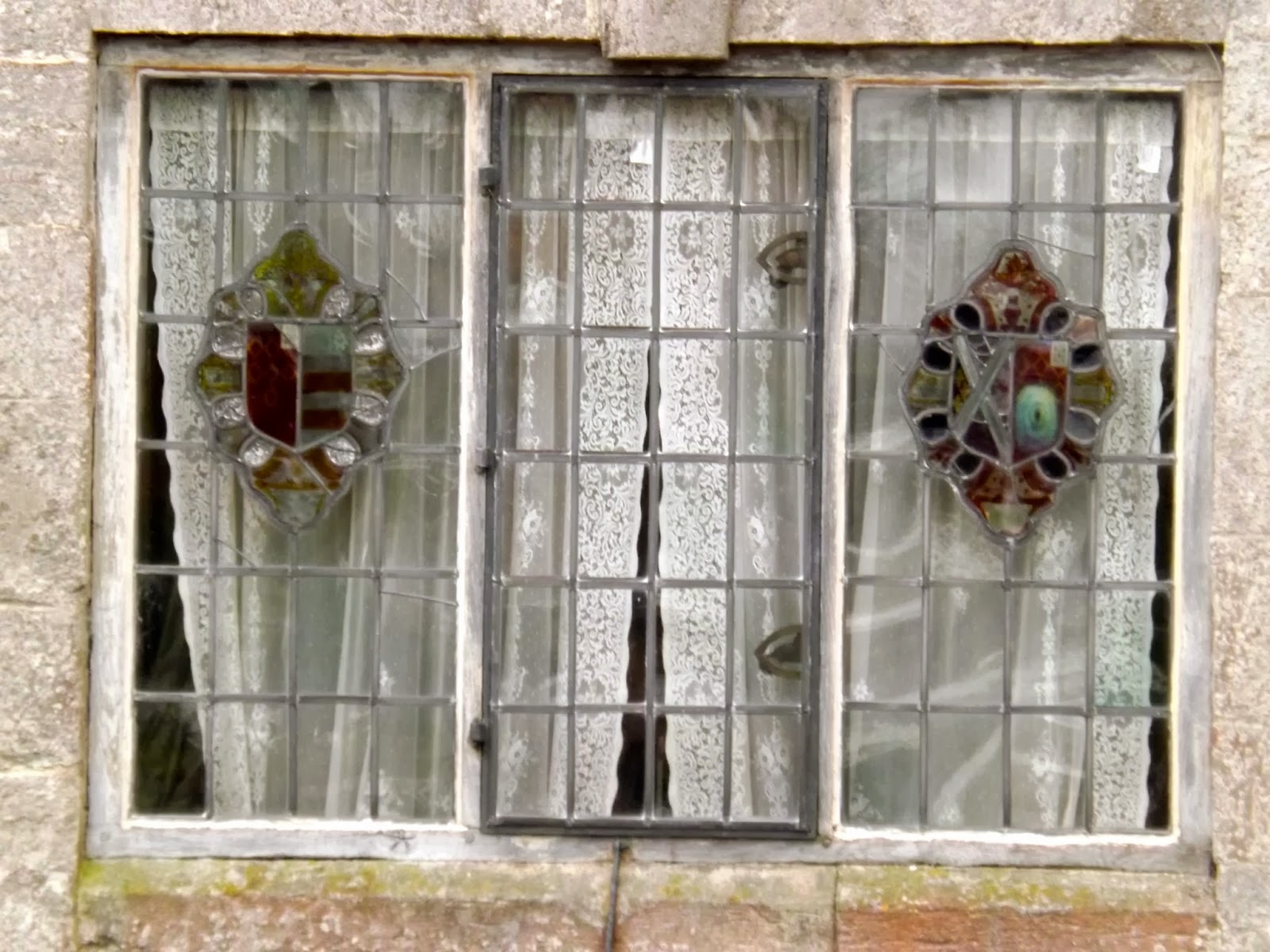
These are the photos I had taken last time I visited the house.
When I film this house I want to get the sense of loss of what used to be there, how they would have seen the house. Whereas when you walk round you do not see it like that. It is now owned by the 'national trust' and they have given me the opportunity to go and film this house before the public are allowed in so there will be no interruptions.
I want to focus on getting the details like in Zarina Bhimji's work show the spaces that would not normally get observed. I think it will be interesting to go back and see the house again with fresh eyes.
These are the photos I had taken last time I visited the house.
Photos
Friday, 14 February 2014
Self directed lens base and digital project
I am inspired by buildings.
Groups of buildings in cities or housing estates or
isolated buildings.
What interests me is how they relate to people. Old
buildings have a sense of history even if they are no longer in use. New
buildings are usually still being used by the people who live or work in or
around the buildings
Examples of modern buildings, which inspire me, are the De
Montfort University Campus Buildings and the office buildings and new library in
Birmingham city center.
An older building that has had a particular impact on me
is the National Trust Property at Baddesley Clinton which was taken by two
couples almost in isolation throughout their lives and which has been restored
or preserved just as it was when they lived there.
The film " Yellow Patch” by Zarina Bhimji,
which I saw at The New Art Gallery Walsall, helped me to start to understand
what it is I like about buildings and start to appreciate film, including
sound, as a medium.
I notice how buildings are used in cinematography and
theatre to help to tell the story and set the scene or atmosphere.
In my lens based project, I would like to:-
i. Look more closely at " Yellow Patch" to
understand why I like it so much.
ii. See if I can use what I find in my own
photographs of places that inspire me.
iii. Perhaps experiment with adding some sound to my
images.
iv. Although I do not have much experience of filmmaking
I would like to continue to experiment a little with this.
v. Experiment with presenting my work as a
"story board" for a film or theatre production.
I hope that the work in this project will feed into my
drawing project, which is around the same theme.
The artists whose work I shall research are: - Annie
Leibovitz, George Shaw, Rut Blees Luxumberg, Zarina Bhanji and John Monks.
Below are some images that I have started off with looking at that I have taken.
Monday, 3 February 2014
Self directed drawing project.
Buildings inspire me.
Groups of buildings in cities or housing estates or
isolated buildings.
What interests me is how they relate to people. Old
buildings have a sense of history even if they are no longer in use. New buildings
are usually still being used by the people who live or work in or around the
buildings.
Examples of modern buildings, which inspire me, are the De
Montfort University Campus Buildings and the office buildings and new library
in Birmingham city center.
An older building that has had a particular impact on me
is Baddesley Clinton. Because of it’s sense of history and place.
In my drawing project, I would like to explore how to
give an impression of "story" or "history" when drawing
buildings - what is it that gives an impression of something more than just a
building?
I think this will be a good topic for trying out different
compositions, mark making, dark and light, contrast and
colour. I also aim to work with texture, perhaps including
different materials in the drawing to create layers and added interest. To get
a sense of what the building actually feels like when you view it.
I hope that the work in this project will feed into my
lens-based work, which is around the same theme. I am interested in work
that could almost be the "story board" for a film or theatre
production.
The artists whose work I shall research are Rut Blees
Luxemburg, Annie Leibovitz (Pilgrimage work) and George Shaw. I hope to
discover some new artists in this project to help improve my work.
Subscribe to:
Posts (Atom)